 Add to Chrome
 Add to Firefox
 Add to Edge
Token Predictors Are Not Planners: Building Physically Grounded Causal Reasoners
Jun 01, 2026
Current benchmarks for embodied vision-language planning often favor linguistic next-token prediction over physically grounded next-state reasoning. This rewards models that mimic statistical language priors rather than track causal dependencies, reducing physical planning to shallow sequence modeling. We argue that reliable physical autonomy requires a shift from linguistically grounded token prediction toward physically grounded causal reasoning. To this end, we introduce Causal-Plan-Bench, a high-fidelity diagnostic suite curated through multi-stage verification to evaluate embodied planning across four causal dimensions. We also construct Causal-Plan-1M, a million-scale corpus of explicit reasoning traces produced by a four-stage annotation pipeline over egocentric videos. Extensive evaluation shows that leading models still struggle to demonstrate genuine physical agency, with Gemini 3 Pro reaching only 38.18 on our benchmark. In contrast, our training recipe enables Causal Planner, built on Qwen3-VL-8B, to internalize physical logic for more accurate next-state estimation. The model achieves strong in-domain performance and cross-benchmark generalization, and reveals a Causal Scaling Law: scaling causal training data to one million instances yields a 36.3% relative gain, from 33.22 to 45.28. Overall, our work provides a concrete step toward turning agents from superficial token predictors into physically grounded causal reasoners.

SkillOpt: Executive Strategy for Self-Evolving Agent Skills
May 25, 2026Agent skills today are hand-crafted, generated one-shot, or evolved through loosely controlled self-revision, none of which behaves like a deep-learning optimizer for the skill, and none of which reliably improves over its starting point under feedback. We argue the skill should instead be trained as the external state of a frozen agent, with the same discipline that makes weight-space optimization reproducible. SkillOpt is, to our knowledge, the first systematic controllable text-space optimizer for agent skills: a separate optimizer model turns scored rollouts into bounded add/delete/replace edits on a single skill document, and an edit is accepted only when it strictly improves a held-out validation score. A textual learning-rate budget, rejected-edit buffer, and epoch-wise slow/meta update make skill training stable while adding zero inference-time model calls at deployment. Across six benchmarks, seven target models, and three execution harnesses (direct chat, Codex, Claude Code), SkillOpt is best or tied on all 52 evaluated (model, benchmark, harness) cells and beats every per-cell competitor among human, one-shot LLM, Trace2Skill, TextGrad, GEPA, and EvoSkill skills. On GPT-5.5 it lifts the average no-skill accuracy by +23.5 points in direct chat, by +24.8 inside the Codex agentic loop, and by +19.1 inside Claude Code. Transfer experiments further show that optimized skill artifacts retain value when moved across model scales, between Codex and Claude Code execution environments, and to a nearby math benchmark without further optimization. Code: https://aka.ms/skillopt
IndexMem: Learned KV-Cache Eviction with Latent Memory for Long-Context LLM Inference
May 25, 2026Large Language Models (LLMs) are increasingly expected to operate over long contexts, yet standard softmax attention incurs a KV cache that grows linearly with sequence length, quickly becoming the bottleneck for long context inference. A practical remedy is to evict less important KV entries; however, existing eviction policies are largely heuristic and struggle to capture the rich, input-dependent distribution of token importance. In this work, we introduce a learnable indexer that predicts KV importance, enabling more accurate retention of critical tokens. Meanwhile, naively evicting tokens permanently discards their information, leading to irreversible forgetting and degraded retrieval over long ranges. To address this, we propose a lightweight latent memory module that compresses evicted tokens into a compact, online-updated state and provides residual readouts to compensate for the attention contributions lost through KV eviction. Collectively, our method enables accurate long-context inference under a bounded KV budget, delivering consistent improvements on RULER (4K/16K) across Qwen, Mistral, and Llama models (up to 25 points under aggressive eviction), markedly more stable Needle-in-a-Haystack retrieval, and superior LongBench scores and compression curves compared to existing eviction policies.
From Raw Experience to Skill Consumption: A Systematic Study of Model-Generated Agent Skills
May 22, 2026Language agents increasingly improve by reusing \emph{skills} -- structured procedural artifacts distilled from past experience. In particular, \emph{domain-level} and \emph{model-generated} skills are especially promising. They offer fast adaptation within a domain by encoding domain-specific recurring procedures, and they scale beyond labor-intensive hand-crafting. However, while extraction methods continue to proliferate, understanding remains limited, with no comprehensive study spanning the full skill lifecycle -- \textbf{experience generation}, \textbf{skill extraction}, and \textbf{skill consumption} -- to ask whether such skills actually work, when they work, and what makes them succeed or fail. To close this gap, we build a utility-grounded evaluation framework that provides systematic experimental results across extractors and target agents, covering five diverse agentic task domains. We find that model-generated skills are beneficial on average but exhibit non-trivial negative transfer, and that neither extractors nor targets behave uniformly. A model can be a strong extractor yet a weak consumer, or vice versa, with skill utility independent of model scale or baseline task strength. To explain these patterns, we then dissect each lifecycle stage in depth, analyzing how experience composition shapes skill quality, what properties characterize useful skills, and how the same skill transfers across different consumers. Finally, we translate these findings into a concrete \emph{meta-skill} that guides skill extraction toward the features tied to actual utility, which consistently improves skill quality across domains and substantially reduces negative transfer.
Covering Human Action Space for Computer Use: Data Synthesis and Benchmark
May 12, 2026Computer-use agents (CUAs) automate on-screen work, as illustrated by GPT-5.4 and Claude. Yet their reliability on complex, low-frequency interactions is still poor, limiting user trust. Our analysis of failure cases from advanced models suggests a long-tail pattern in GUI operations, where a relatively small fraction of complex and diverse interactions accounts for a disproportionate share of task failures. We hypothesize that this issue largely stems from the scarcity of data for complex interactions. To address this problem, we propose a new benchmark CUActSpot for evaluating models' capabilities on complex interactions across five modalities: GUI, text, table, canvas, and natural image, as well as a variety of actions (click, drag, draw, etc.), covering a broader range of interaction types than prior click-centric benchmarks that focus mainly on GUI widgets. We also design a renderer-based data-synthesis pipeline: scenes are automatically generated for each modality, screenshots and element coordinates are recorded, and an LLM produces matching instructions and action traces. After training on this corpus, our Phi-Ground-Any-4B outperforms open-source models with fewer than 32B parameters. We will release our benchmark, data, code, and models at https://github.com/microsoft/Phi-Ground.git
QaRL: Rollout-Aligned Quantization-Aware RL for Fast and Stable Training under Training--Inference Mismatch
Apr 09, 2026Large language model (LLM) reinforcement learning (RL) pipelines are often bottlenecked by rollout generation, making end-to-end training slow. Recent work mitigates this by running rollouts with quantization to accelerate decoding, which is the most expensive stage of the RL loop. However, these setups destabilize optimization by amplifying the training-inference gap: rollouts are operated at low precision, while learning updates are computed at full precision. To address this challenge, we propose QaRL (Rollout Alignment Quantization-Aware RL), which aligns training-side forward with the quantized rollout to minimize mismatch. We further identify a failure mode in quantized rollouts: long-form responses tend to produce repetitive, garbled tokens (error tokens). To mitigate these problems, we introduce TBPO (Trust-Band Policy Optimization), a sequence-level objective with dual clipping for negative samples, aimed at keeping updates within the trust region. On Qwen3-30B-A3B MoE for math problems, QaRL outperforms quantized-rollout training by +5.5 while improving stability and preserving low-bit throughput benefits.
Bit-by-Bit: Progressive QAT Strategy with Outlier Channel Splitting for Stable Low-Bit LLMs
Apr 09, 2026Training LLMs at ultra-low precision remains a formidable challenge. Direct low-bit QAT often suffers from convergence instability and substantial training costs, exacerbated by quantization noise from heavy-tailed outlier channels and error accumulation across layers. To address these issues, we present Bit-by-Bit, a progressive QAT framework with outlier channel splitting. Our approach integrates three key components: (1) block-wise progressive training that reduces precision stage by stage, ensuring stable initialization for low-bit optimization; (2) nested structure of integer quantization grids to enable a "train once, deploy any precision" paradigm, allowing a single model to support multiple bit-widths without retraining; (3) rounding-aware outlier channel splitting, which mitigates quantization error while acting as an identity transform that preserves the quantized outputs. Furthermore, we follow microscaling groups with E4M3 scales, capturing dynamic activation ranges in alignment with OCP/NVIDIA standards. To address the lack of efficient 2-bit kernels, we developed custom operators for both W2A2 and W2A16 configurations, achieving up to 11$\times$ speedup over BF16. Under W2A2 settings, Bit-by-Bit significantly outperforms baselines like BitDistiller and EfficientQAT on both Llama2/3, achieving a loss of only 2.25 WikiText2 PPL compared to full-precision models.
RE-TRAC: REcursive TRAjectory Compression for Deep Search Agents
Feb 02, 2026LLM-based deep research agents are largely built on the ReAct framework. This linear design makes it difficult to revisit earlier states, branch into alternative search directions, or maintain global awareness under long contexts, often leading to local optima, redundant exploration, and inefficient search. We propose Re-TRAC, an agentic framework that performs cross-trajectory exploration by generating a structured state representation after each trajectory to summarize evidence, uncertainties, failures, and future plans, and conditioning subsequent trajectories on this state representation. This enables iterative reflection and globally informed planning, reframing research as a progressive process. Empirical results show that Re-TRAC consistently outperforms ReAct by 15-20% on BrowseComp with frontier LLMs. For smaller models, we introduce Re-TRAC-aware supervised fine-tuning, achieving state-of-the-art performance at comparable scales. Notably, Re-TRAC shows a monotonic reduction in tool calls and token usage across rounds, indicating progressively targeted exploration driven by cross-trajectory reflection rather than redundant search.
DenoiseRotator: Enhance Pruning Robustness for LLMs via Importance Concentration
May 29, 2025Pruning is a widely used technique to compress large language models (LLMs) by removing unimportant weights, but it often suffers from significant performance degradation - especially under semi-structured sparsity constraints. Existing pruning methods primarily focus on estimating the importance of individual weights, which limits their ability to preserve critical capabilities of the model. In this work, we propose a new perspective: rather than merely selecting which weights to prune, we first redistribute parameter importance to make the model inherently more amenable to pruning. By minimizing the information entropy of normalized importance scores, our approach concentrates importance onto a smaller subset of weights, thereby enhancing pruning robustness. We instantiate this idea through DenoiseRotator, which applies learnable orthogonal transformations to the model's weight matrices. Our method is model-agnostic and can be seamlessly integrated with existing pruning techniques such as Magnitude, SparseGPT, and Wanda. Evaluated on LLaMA3, Qwen2.5, and Mistral models under 50% unstructured and 2:4 semi-structured sparsity, DenoiseRotator consistently improves perplexity and zero-shot accuracy. For instance, on LLaMA3-70B pruned with SparseGPT at 2:4 semi-structured sparsity, DenoiseRotator reduces the perplexity gap to the dense model by 58%, narrowing the degradation from 8.1 to 3.4 points. Codes are available at https://github.com/Axel-gu/DenoiseRotator.
Memory-Efficient Training for Deep Speaker Embedding Learning in Speaker Verification
Dec 02, 2024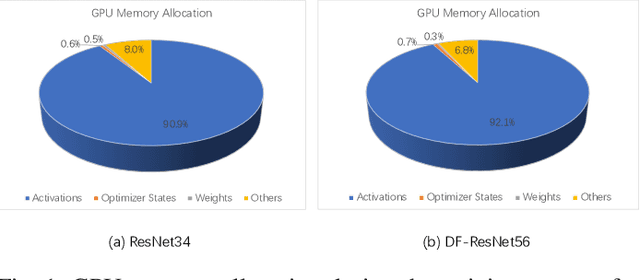

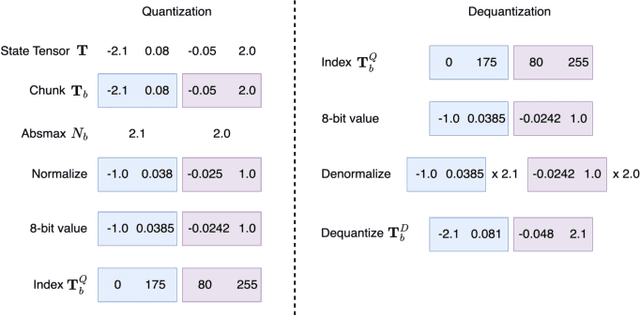
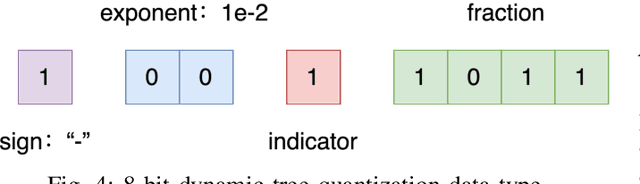
Recent speaker verification (SV) systems have shown a trend toward adopting deeper speaker embedding extractors. Although deeper and larger neural networks can significantly improve performance, their substantial memory requirements hinder training on consumer GPUs. In this paper, we explore a memory-efficient training strategy for deep speaker embedding learning in resource-constrained scenarios. Firstly, we conduct a systematic analysis of GPU memory allocation during SV system training. Empirical observations show that activations and optimizer states are the main sources of memory consumption. For activations, we design two types of reversible neural networks which eliminate the need to store intermediate activations during back-propagation, thereby significantly reducing memory usage without performance loss. For optimizer states, we introduce a dynamic quantization approach that replaces the original 32-bit floating-point values with a dynamic tree-based 8-bit data type. Experimental results on VoxCeleb demonstrate that the reversible variants of ResNets and DF-ResNets can perform training without the need to cache activations in GPU memory. In addition, the 8-bit versions of SGD and Adam save 75% of memory costs while maintaining performance compared to their 32-bit counterparts. Finally, a detailed comparison of memory usage and performance indicates that our proposed models achieve up to 16.2x memory savings, with nearly identical parameters and performance compared to the vanilla systems. In contrast to the previous need for multiple high-end GPUs such as the A100, we can effectively train deep speaker embedding extractors with just one or two consumer-level 2080Ti GPUs.